
How Dashcam and Surveillance Footage Help in Truck Accident Claims
There will always be someone to blame for a car accident. Most often, the cause boils down to reckless driving. It’s bad enough when there is reckless driving or speeding in an SUV or sedan.
It’s even worse when that occurs in a fully loaded semi-truck. With 18 wheels and cargo weighing up to 40 tons, that truck can cause life-altering devastation to anyone it crashes into.
For victims of truck accidents, there are viable options to pursue to recover compensation for medical expenses and vehicle repairs. The challenge becomes in assigning clear blame to the truck driver. That is when dashcam and surveillance footage can play a pivotal role in establishing who is at fault.
Obtaining crucial evidence is a task that an experienced Charleston truck accident attorney can handle from start to finish.
While you are dealing with your recovery and figuring out what to do with your car, the attorneys at Hendrickson & Long, PLLC, can spring into action to secure any relevant footage before it is deleted.
You might not be aware of all the possible video footage that could help prove your case.
Types of Video Footage Used in West Virginia Truck Claims
Every family has “home movies.” These scenes of family life were once captured with Super 8 film cameras that required you to shoot the film, have it developed, and then run it through a movie projector. That was a lot of work to see footage of a kid blowing out birthday candles.
Along came video camera technology, and soon everyone was shooting videos of family gatherings. Today, every smartphone allows for an unlimited cache of videos and photos that capture everything from the mundane to the spectacular.
That digital recording technology now extends to all kinds of camera setups that can be focused on driving and traffic.
These are the different types of video footage that can be used in your truck accident claim.
Dash Cams
You’ve no doubt seen dash cam footage of a traffic accident. Dashboard-mounted cameras, or dash cams, are becoming increasingly popular among drivers who want a record of their commutes. They are also commonplace in the trucking industry. In fact, most trucking companies make the use of dash cameras mandatory for their fleets.
This is how they’re utilized:
- Forward-facing dash cams record the road in front of the truck
- Driver-facing dash cams record the driver of the truck
- Four-way dash cams record the front and sides of the truck as well as the driver
Traffic Cameras
Digital cameras are being utilized by police forces all across the country to “snap” photos of cars running red lights. Unfortunately for law enforcement in West Virginia, the use of traffic cameras for automated enforcement is prohibited by West Virginia Code §17C-6-7A.
However, there are many municipalities that use street cameras for public safety purposes.
And yes, that includes recording truck accidents.
Surveillance Cameras
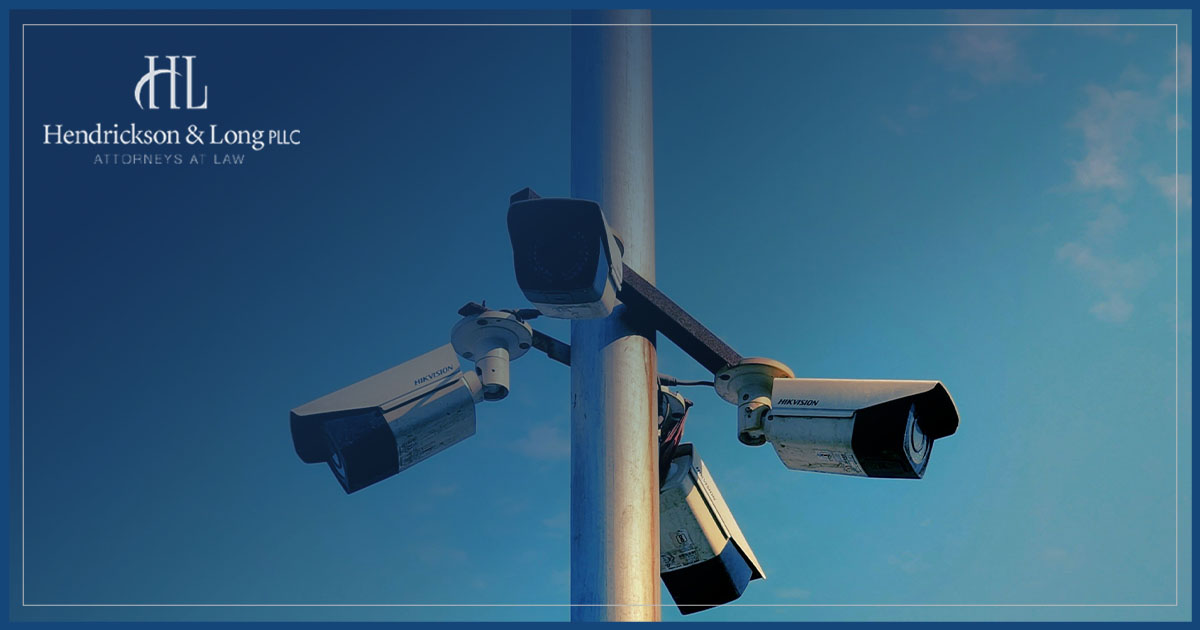
In addition to the cameras on our phones and dashboards, we can also install doorbell cameras as part of a home security surveillance system. These same cameras are used by many businesses to record activities outside of their premises. If an accident occurs within the range of these cameras, it can be used as evidence.
None of this footage will help unless it is quickly preserved. With traffic and surveillance cameras, footage is often automatically deleted after 30 days unless it is downloaded and saved.
Your attorney can help secure and preserve that evidence, but only if they act fast within days of the accident.
How Dashcams Prove Negligence and Commercial Driver Errors
Video footage of an accident might be the most compelling piece of evidence you can have in support of your personal injury claim. It can prove negligence by capturing traffic violations and reckless driving in real time. The footage can prove that a truck driver was speeding, running a red light, tailgating, failing to check blind spots, or making unsafe lane changes.
Ironically, that can all come from the truck’s dash cameras. Yes, the driver knows that they are being recorded, but they still engage in that reckless action.
For instance, a driver-facing camera can reveal if the truck driver was driving drowsy, texting, or reaching for something that caused them to lose control of their rig. That same footage can be used alongside the truck’s black box data that records when a truck brakes, speeds, or shifts gears.
Video footage can also be utilized by accident reconstruction experts. They can analyze footage and determine vehicle speed, distances, and impact trajectories.
Most importantly, video footage can defend against an insurance company that attempts to shift the blame onto you for the accident.
Bottom line: Video footage doesn’t lie.
Challenges and Legal Considerations
While it might seem irrefutable, video evidence must be collected and handled carefully.
When presented with a truck accident claim, the skilled attorneys at Hendrickson & Long, PLLC know that the first vital step is to immediately issue a spoliation letter. That letter legally compels the trucking company to preserve all dashcam footage, logs, and electronic data.
Without that letter, the trucking company is within its rights to “override” the footage as part of its storage policy.
Our attorneys also know that we must prove that any video evidence is authentic. That means it can’t be edited. It is important to note that video footage of a truck accident can be used to shift blame onto a car driver. West Virginia’s modified comparative fault allows victims to be held partially to blame for an accident.
However, you can still recover compensation, but only if your share of fault is 50% or less.
We understand how these laws can be applied even with compelling video evidence, and if we’re not confident in our client’s version of the accident, we won’t pursue the claim.
We don’t want to waste anyone’s time with false hope, so we stick to the facts and evidence. When that supports our client, we work tirelessly to help them achieve the maximum benefits that they’re entitled to.
If you’ve been involved in a truck accident, you need to act fast to preserve valuable video evidence. That begins with a call to Hendrickson & Long, PLLC.
Reach out today to schedule a free consultation.